Giving Voice to Sorrow -Healing Ancestral Grief
Ancestral grief is sorrow carried across generations, often unnamed yet deeply felt within families and cultures. It lives not only in personal memory but in collective memory, where historical trauma continues to shape identity long after the original events have passed. The Irish story offers a powerful example of this inherited grief.
The Great Famine (1845–1852) was not simply an agricultural disaster but a profound cultural and emotional rupture. Around one million people died and another million emigrated, leaving villages emptied, families separated, and traditional ways of life shattered. Ireland was permanently changed, and a vast diaspora spread across North America, Britain, Australia, and beyond.
For many Irish families, emigration itself became another form of mourning. Leaving often meant saying goodbye forever — not only to family, but to homeland, language, community, and belonging. In my work with people of Irish ancestry, I often hear the same refrain: they never talked about it. Survival frequently required silence and disconnection from memory itself.
In the Connemara Gaeltacht, the Irish speaking region where i grew up, the phrase aimsir an drochshaoil — “the time of the bad life” or “the difficult time” — is still spoken to this day, almost in a hushed referent tones, when referring to the Famine years. The words carry more than historical memory; they hold an inherited emotional weight passed quietly through generations. Even where stories were fragmented or silenced, the suffering remained present in family consciousness, woven into attitudes toward hardship, loss, emigration, and survival itself.
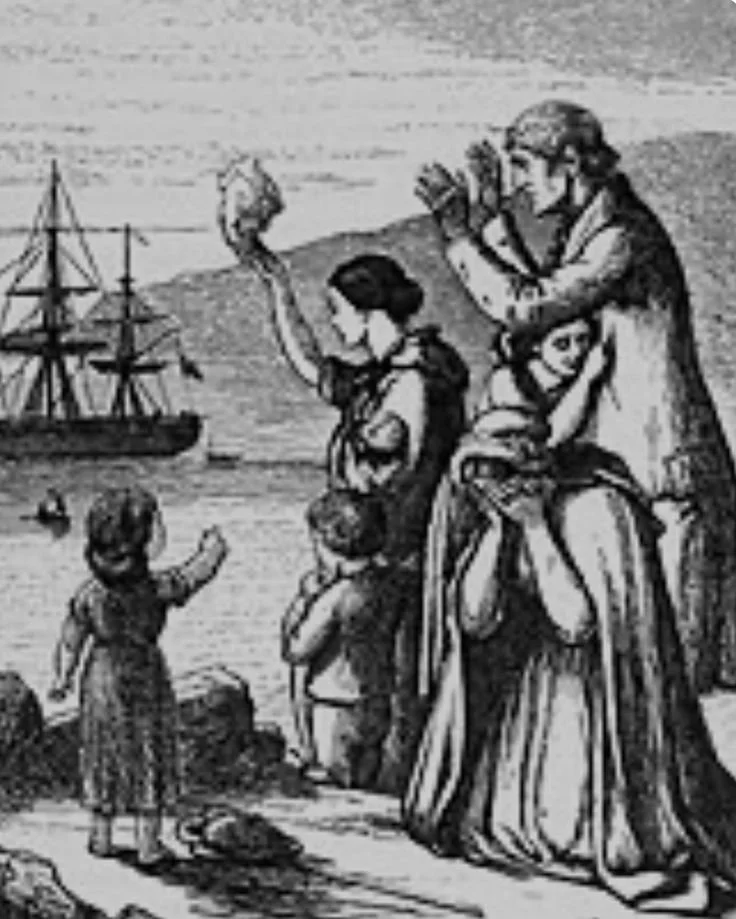
1868 illustration by Henry Doyle “Emigrants leave Ireland”. (library of Congress).
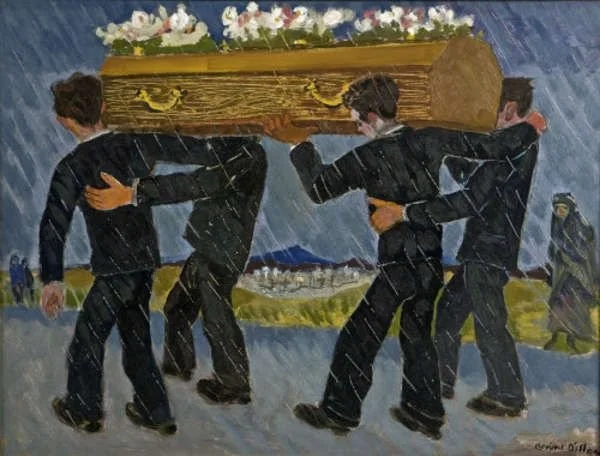
Painting by Gerard Dillon
Exile and Cumha - The Irish word for longing or yearning
In Gaeilge, the Irish language, there is a word for this longing: cumha — a deep ache of the heart for what has been lost or left behind. The grief of exile continued quietly across generations, moving through families as inherited sorrow. Even today, many descendants feel an inexplicable pull toward Ireland and speak of tears, grief, and recognition when they return for the first time. The trauma of emigration extended beyond physical displacement into cultural silence. Many Irish immigrants concealed aspects of their identity in order to survive or integrate. The Irish language, traditions, and even memories of famine often remained unspoken. Similar silences existed within families, where the pain of loss was carried quietly rather than openly expressed, allowing grief to move invisibly through generations.
This grief found ritual expression in what became known as the American Wake, held on the eve of departure. The night itself might appear joyful — music, dancing, storytelling, laughter rising against despair — yet beneath it lay the knowledge of irreversible separation. By morning, when families gathered at railway stations or ports, the atmosphere changed entirely. Witnesses recalled keening that could be heard for miles as emigrants disappeared toward ships bound for America. It was mourning enacted for the living.

The Bean Chaointe - The Keening Woman
Within Irish tradition, there existed a sacred practice that gave voice to sorrow: the bean chaointe, or keening woman. The bean chaointe performed lamentations at wakes and funerals, expressing grief through song, cries, poetry, and ritualized mourning. Keening was not merely performance; it was communal grief made audible. The bean chaointe embodied the pain of both the deceased and the living, allowing sorrow to be witnessed and shared rather than hidden.
As famine, emigration, colonization, and modernization reshaped Ireland, many traditions faded, including keening. Their loss mirrored the wider erosion of language, folklore, and ancestral connection. The disappearance of the bean chaointe may itself symbolize ancestral grief. Yet the voices of the Keening women remind us that grief once had a place within community life and sorrow did not have to be carried alone. Their laments preserved ancestral memory and affirmed the humanity and the story of those who suffered.
Ultimately, ancestral grief invites descendants to bear witness to what came before. By reconnecting with these histories and rituals, inherited sorrow can be transformed into remembrance, healing, and renewed connection with ancestry. Through the Bean Chaointe tradition, we can begin to reconnect with ancestral ways of mourning that honour grief, memory, and belonging.
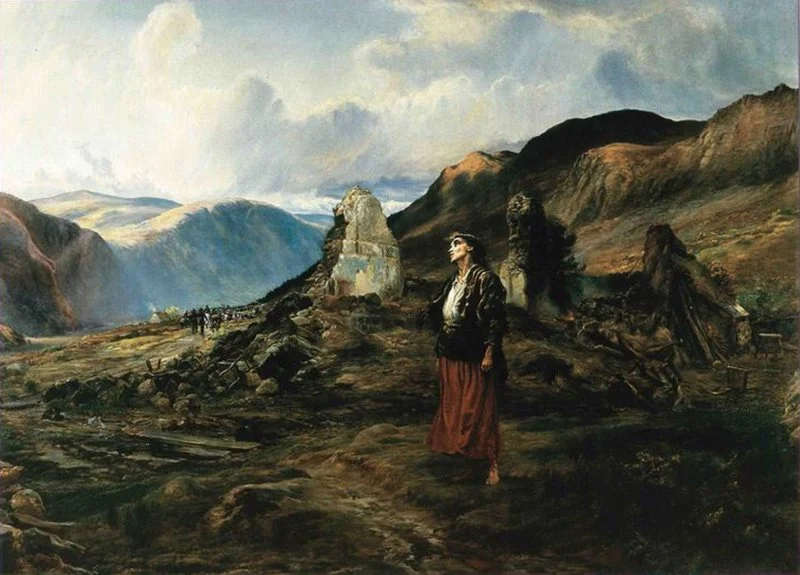
‘Evicted’ by Lady Elizabeth Butler, a well-known English military artist and one of the most significant Irish subject painters of the late nineteenth century. It concerns eviction which she witnessed in Glendalough, County Wicklow
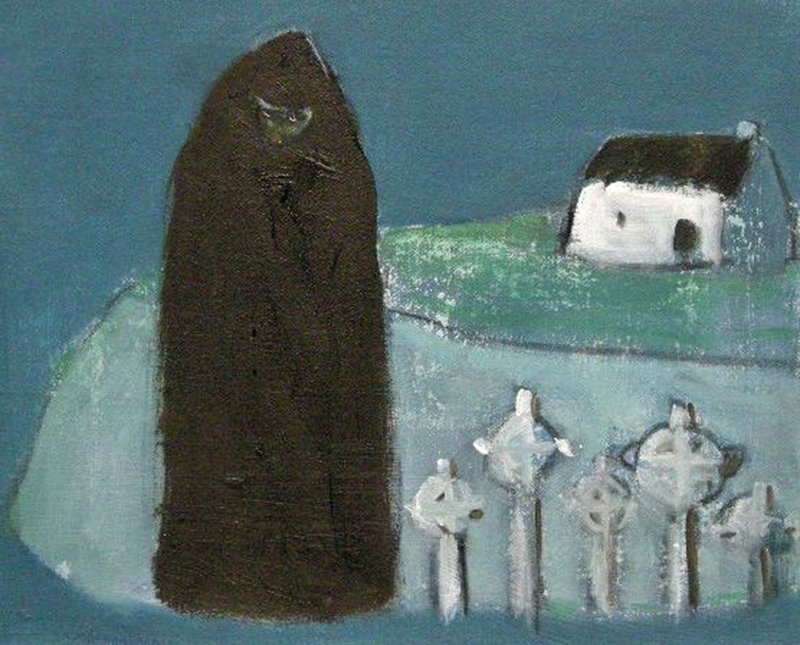
Padraig MacMiadhachain (1929-), Guardian of the Sleeping Memories – County Mayo, oil on canvas
Self-Guided Online Course
The Bean Chaointe, Lamenting the Dead course offers a space to explore these ancestral traditions of lament, remembrance, and healing.
In this self guided course, we deepen into ritual through the figure of the Bean Chaointe—the Keening Woman of Ireland—who stood at the threshold between worlds, keening for the dead and the living alike. Through her, we encounter a way of giving voice to sorrow, rage, love, and all that cannot be spoken. Together, we explore Irish ancestral customs surrounding death, grief, and the Gaelic Otherworld, and consider how ritual and ancestral wisdom might guide us in meeting loss and transition today. The course offers a rich window into an ancient world, weaving together Irish language, poetry, music, and song into a visceral and immersive experience.
Self -Guided Online Course
Lamenting the Dead
Bean Chaointe | The Keening Woman Irish Ancestral customs of Death, Grief and the Gaelic Otherworld.
We explore the Bean Chaointe—the Keening Woman of Ireland—who stood at the threshold between worlds, keening for the dead and for the living alike. Through her, we encounter a way of giving voice to sorrow, rage, love, and all that cannot be spoken. Together, we consider how ritual and ancestral wisdom might support and guide us in meeting grief, loss, and the thresholds of transition. This course offers a space for reflection, cultural exploration, and embodied engagement with these traditions.
