Depth Psychology & Irish Myth
Depth psychology explores the unconscious layers of the psyche — the hidden, symbolic forces that shape our behaviour, imagination, and sense of meaning. The unconscious can be understood as the vast interior field beneath everyday awareness: the realm of dreams, instincts, memory, archetypes, and inherited patterns that influence us without our conscious control.
Developed through the work of thinkers such as Carl Gustav Jung and Sigmund Freud, depth psychology proposes that beneath the surface personality lies a deeper symbolic world.
Jung described this as the collective unconscious — a shared reservoir of archetypes and mythic patterns common to all humanity. From this perspective, myth and folklore are not primitive superstition but expressions of profound psychological realities. Story then becomes a map of the soul.
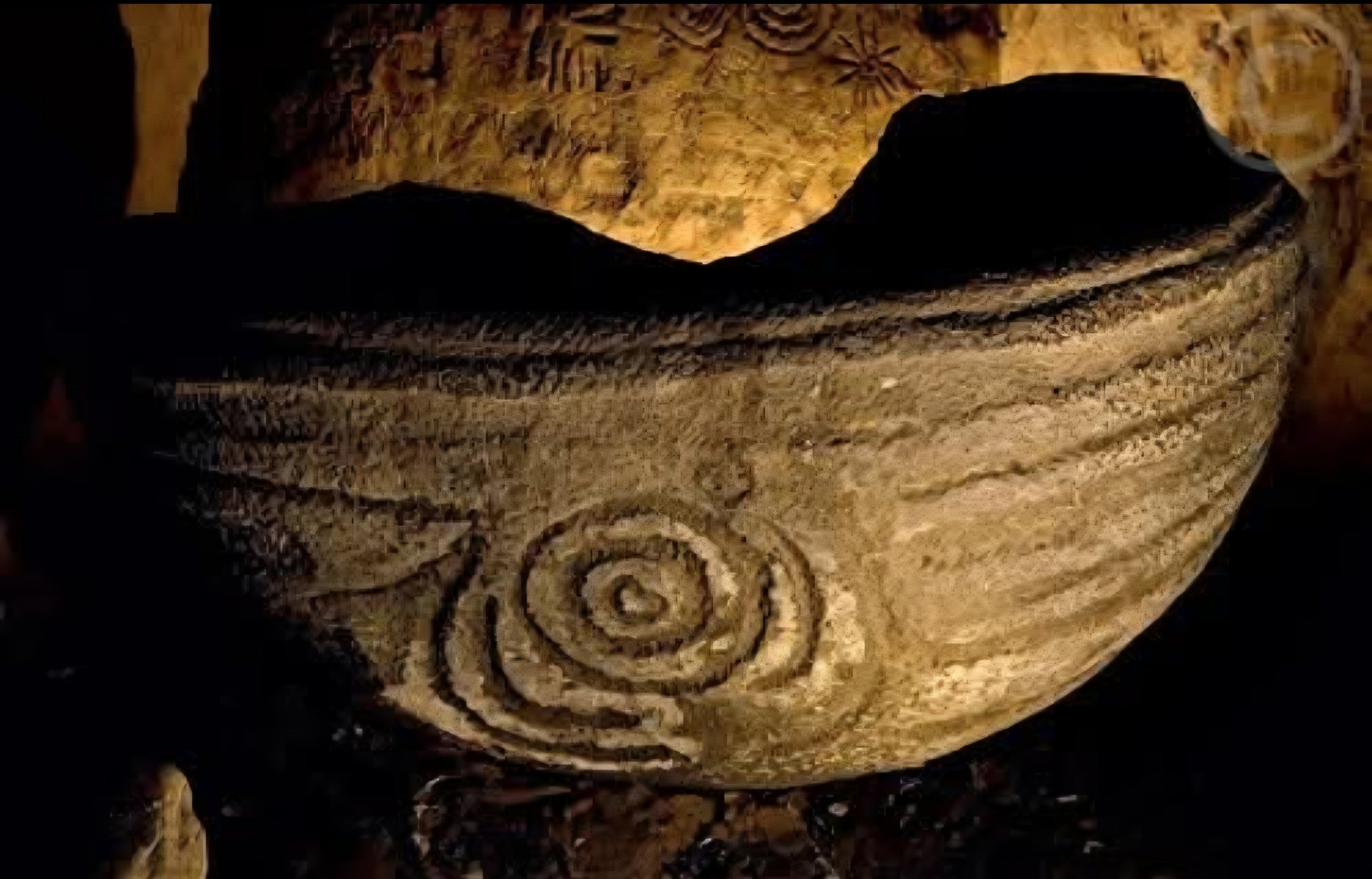
Dagda's Cauldron, Knowth Passage Tomb, Ireland. 3200 BC . Photography Ken Williams.
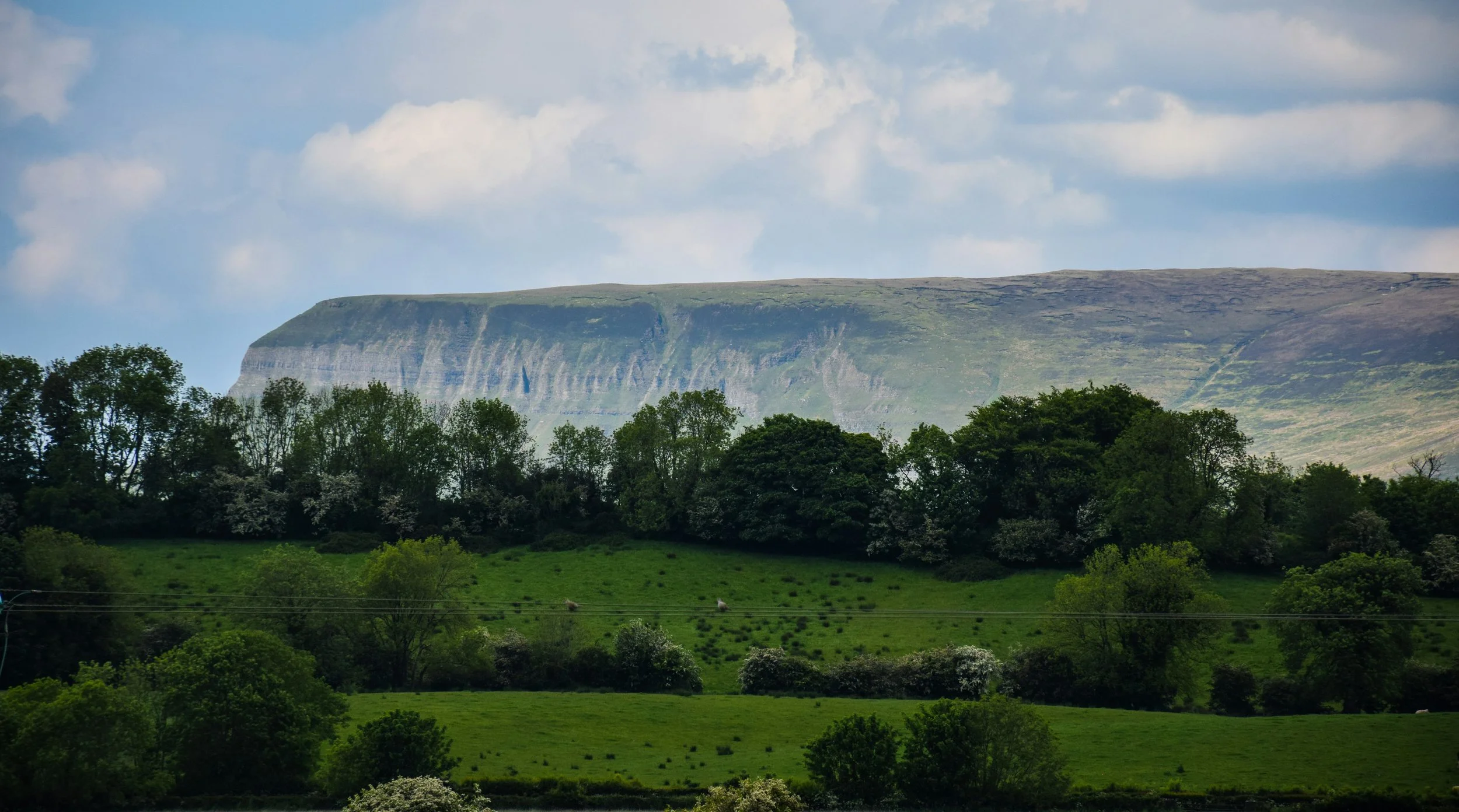
Ben Bulben, is a steep-sided and flat-topped mountain in County Sligo.
Irish Myth & Folklore
Irish mythology and folklore are especially resonant with depth psychology because they preserve a living symbolic imagination. In early medieval manuscripts such as the Lebor na hUidre and the Book of Leinster, tales describe the boundary between visible and invisible realms as thin.
In Irish folklore we hear tales of The Otherworld (Tír na nÓg), shape-shifting beings, prophetic dreams, and sacred landscapes that mirror archetypal patterns within the psyche.
The hero Cú Chulainn, in Irish Mythology for example, embodies the warrior archetype; his feats and moments of wild rage dramatise inner psychic conflict and transformation.
Irish literary voices have long intuited this depth dimension. W. B. Yeats, writing of Ben Bulben, imagined “the square white door” opening in the mountain to release faery riders into the night.
Yeats understood folklore as a doorway into the anima mundi — the soul of the world — where imagination and spirit interpenetrate. His vision echoes Jung’s sense that archetypes are encountered as living presences, surfacing through dreams and vision.
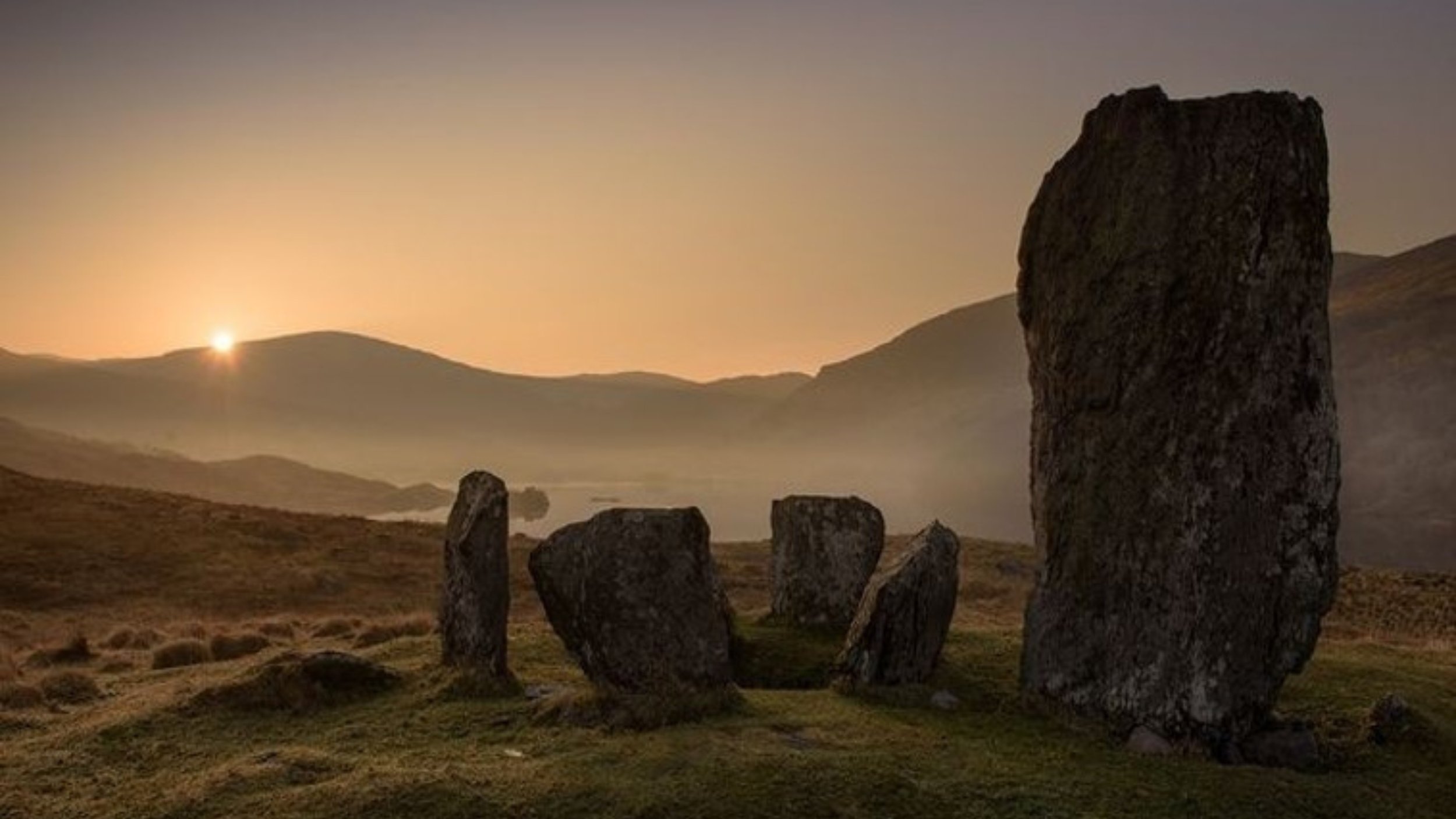
Uragh Stone Circle, Gleninchaquin, Co. Kerry - Photography Ken Williams.
Depth in Daily Life
Similarly, James Joyce structured Ulysses around the Homeric myth, suggesting that ordinary life, a Day in Dublin, unfolds against an archetypal backdrop. Seamus Heaney, in poems such as “Bogland,” evokes the peat bog as an image of psychological depth: layered, preservative, ancient — “The wet centre is bottomless.” The bog becomes a powerful metaphor for the unconscious itself.
For Nuala Ní Dhomhnaill, the wonderful Irish language poet, she saw the Irish language itself function as a psychic vessel capable of carrying submerged mythic memory. She has described Irish as “a language that has been in the dark for a long time,” suggesting it holds dreamlike and ancestral energies — a formulation strikingly close to Jung’s collective unconscious. In her work, mythology is not an artifact of the past but a living dreamtime layer that continues to surface through poetry and imagination. “The Irish myths were not just stories to me—they were a kind of second skin”.
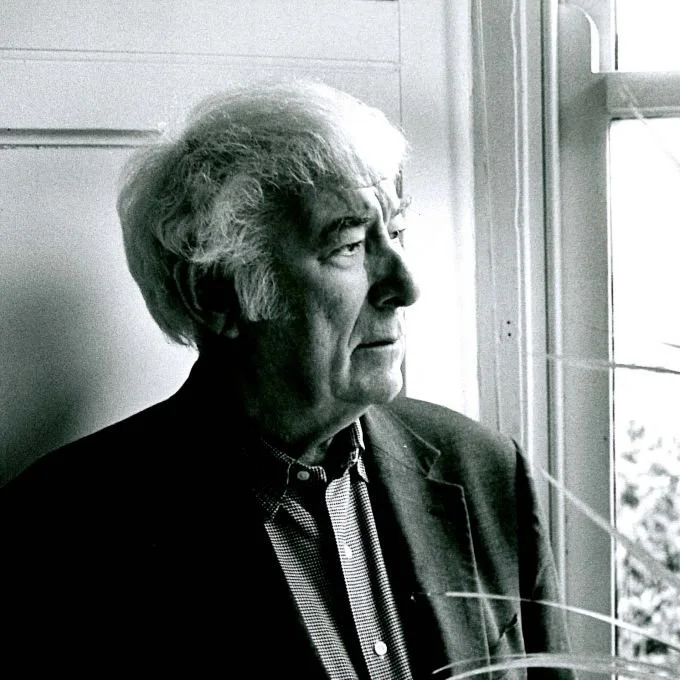
Seamus Heaney, in poems such as “Bogland,” evokes the peat bog as an image of psychological depth. Photography by Jackie Nickerson 2007.
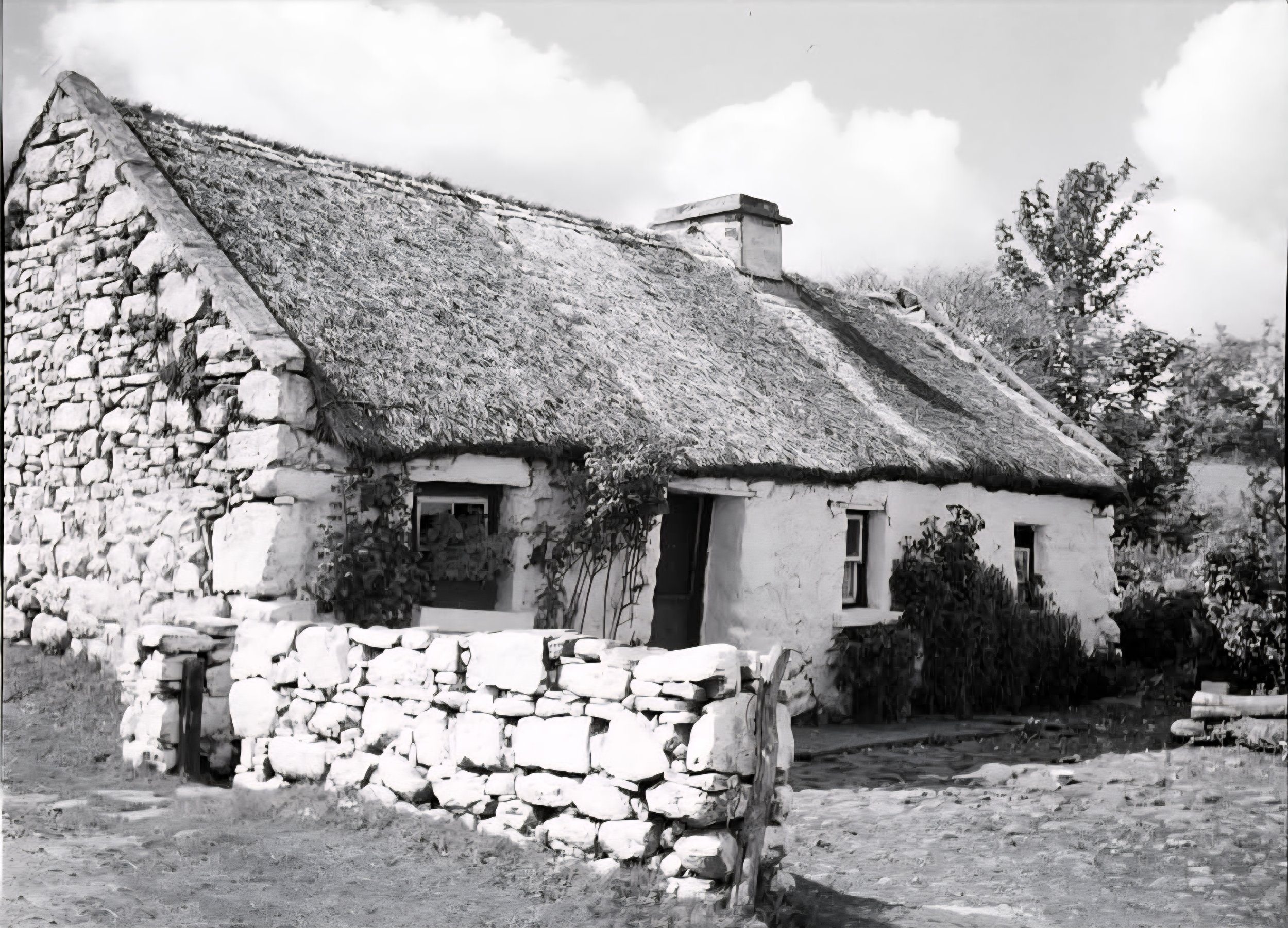
Cottages in Ireland. Photography by Caoimhin O Danachair. Folklore Collection. Dúchas.
The Mythic Human Psyche
Ultimately, depth psychology and Irish myth and folklore converge in their shared understanding that the human psyche is mythic at its core. Folklore is not decoration but psychic inheritance — the collective unconscious speaking in a local accent. The Irish reverence for thresholds — twilight, crossroads, bridges, liminal spaces — mirrors the psychological threshold between conscious and unconscious awareness. Myths and dreams invite us into relationship with the deeper layers of ourselves.
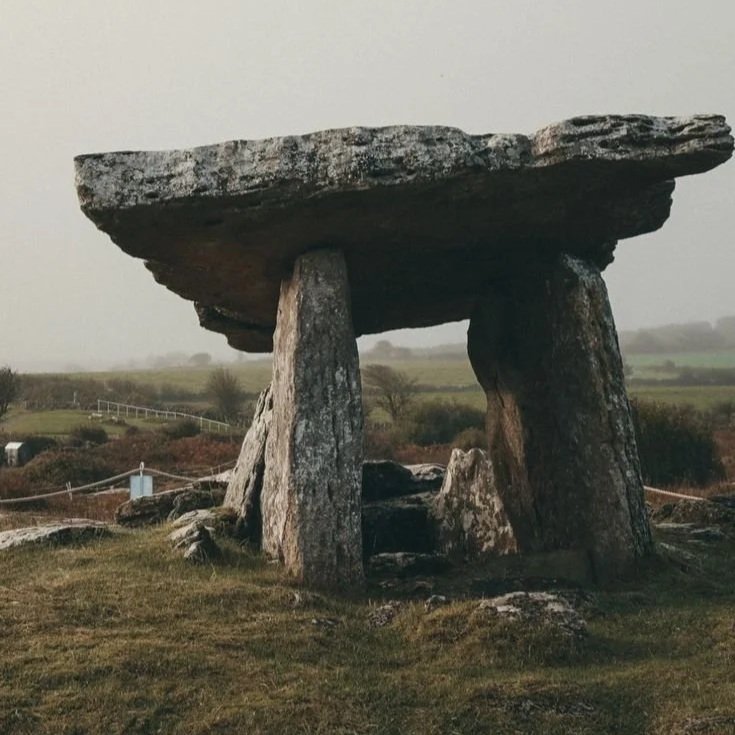
Poulnabrone Dolmen, the Burren, County Clare, Ireland
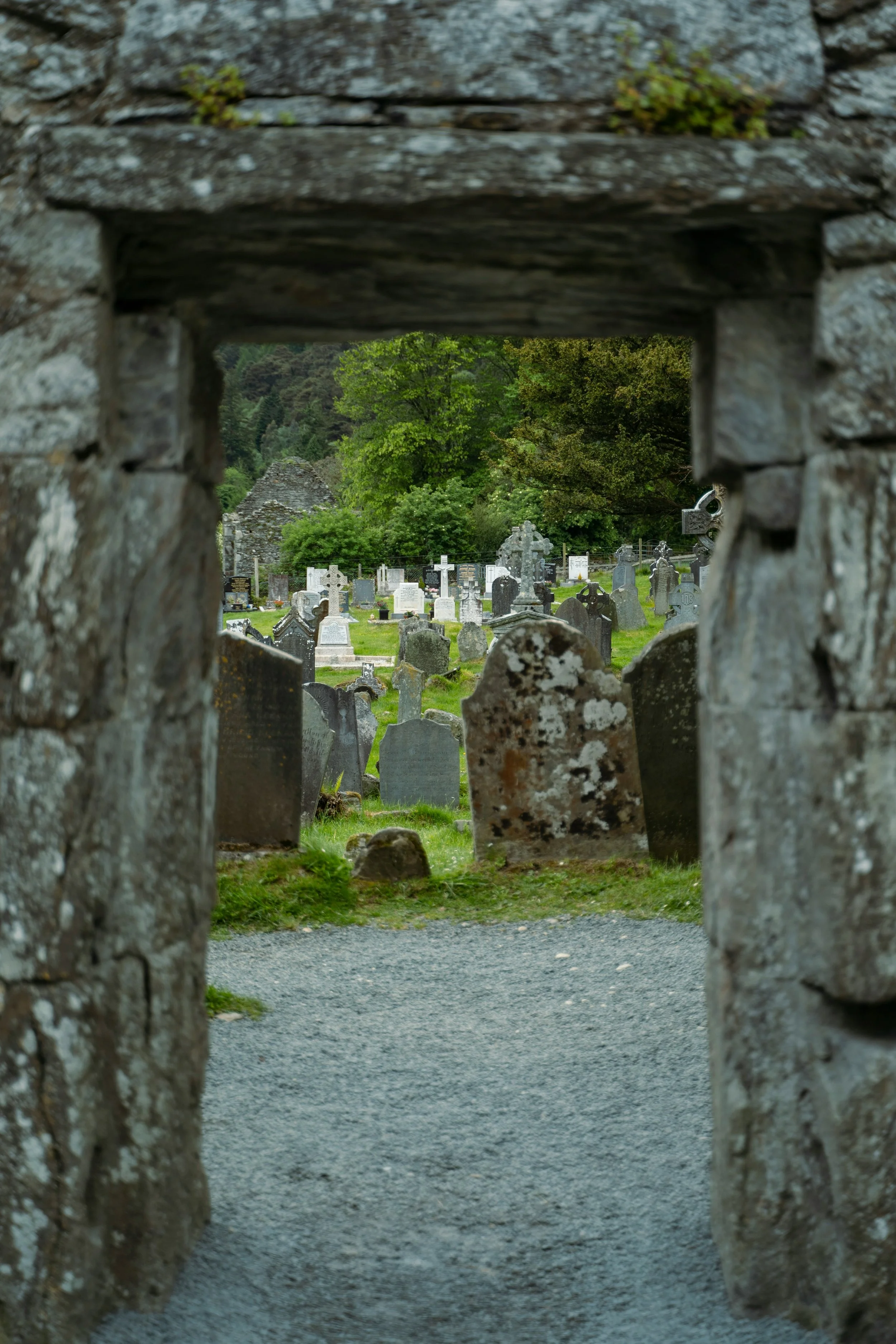
The Philosophy of Deepening the Senses
My Deepening the Senses work interweaves these strands — depth psychology, Irish mythology and folklore, the Irish language, and poetry — as pathways into your own inner landscape. Through story, symbol, ritual and sensory awareness, this work invites you to cultivate a living relationship with the unconscious: not as something abstract, but as a felt, embodied terrain within you.
By engaging mythic imagery, ancestral language, and poetic imagination and story, you begin to become curious about the archetypal patterns moving through your own life. In this way, folklore becomes personal; language becomes a vessel of memory; and imagination becomes a bridge toward integration, personal development, and wholeness.
Together, these traditions remind us that beneath modern rationality flows an older river of imagination — shaping our identity and our days. By deepening our senses and turning inward, we learn to listen to its current and enter into relationship with it, letting it nourish our lives.
“Put your ear down close to your soul and listen hard.”
Anne Sexton
(1928–1974)
